

Understanding Leverage in Forex Trading
Leverage is a fundamental concept in forex trading that allows traders to control a larger position size with a smaller amount of capital. This mechanism can amplify both profits and losses, making it essential for forex traders to fully understand its implications. In this article, we will explore what leverage is, how it works, the benefits and risks associated with it, and strategies for using leverage intelligently. If you are looking for reputable platforms, consider checking out forex trading what is leverage Trading Brokers in Bangladesh.
What is Leverage?
In simple terms, leverage in forex trading refers to the ability to control a large position with a relatively small amount of capital. It is expressed as a ratio, such as 1:100 or 1:200. A leverage of 1:100 means that for every $1 of your own capital, you can control $100 in the market. This is made possible through margin trading, whereby traders borrow funds from their brokers to amplify their trading capacity.
How Leverage Works in Forex Trading
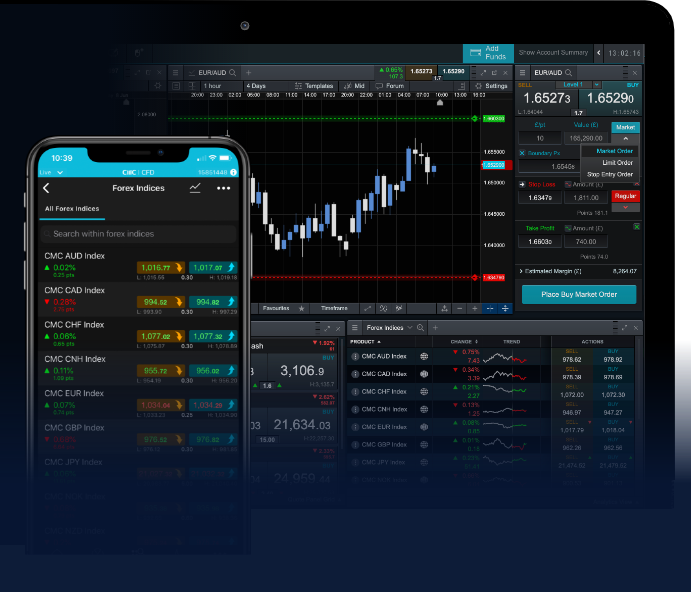
When you open a forex trading position, you are required to deposit a certain amount of money, referred to as margin. The amount of margin required varies depending on the leverage ratio offered by your broker. Suppose you want to buy $10,000 worth of a currency pair. If your broker offers a leverage of 1:100, you would only need to deposit $100 as margin to open that position.
The equation that illustrates this relationship is:
Margin = Trade Size / Leverage
So in our example, the calculation would look like this:
Margin = $10,000 / 100 = $100
Benefits of Using Leverage
The primary benefit of leverage is its ability to enhance potential profits. By controlling a larger position with a smaller investment, traders can realize significant gains with relatively modest capital outlay. For example, if a trader with a margin of $100 experiences a 1% increase in their position, they would make a profit of $100 on a $10,000 trade.
Leverage also allows traders to diversify their investments. With a higher buying power, traders can open multiple positions across different currency pairs, which can be an effective way to spread risk.
Furthermore, leveraging is a common practice that is not only found in forex but across various trading instruments, such as stocks and commodities. This familiarity can make it more approachable for new traders.
Risks Associated with Leverage
While leverage can amplify profits, it also magnifies losses. This is one of the primary risks associated with trading on margin. A minor adverse market movement can result in substantial losses that far exceed the initial capital invested. In extreme cases, traders may lose their entire margin and even incur additional debt to their broker.
Another risk involves the potential for margin calls. If the market moves against a trader’s position, their equity may drop below the required maintenance margin. In this situation, the broker may issue a margin call, requiring additional funds to maintain the position. If the trader fails to meet this requirement, the broker can liquidate the trader’s positions without prior consent, leading to additional losses.
Additionally, high leverage can lead to emotional trading decisions. The stress of managing significant positions may result in irrational fears and greed, leading traders to deviate from their strategies.
How to Use Leverage Wisely
To leverage effectively and minimize risks, traders should consider the following strategies:
- Use Low Leverage: New traders are often advised to begin with lower leverage ratios to limit their exposure. Starting with a conservative approach allows for a better understanding of the market dynamics.
- Risk Management: Implementing robust risk management techniques, such as setting stop-loss and take-profit orders, can help protect against excessive losses while allowing profits to run.
- Maintain a Trading Journal: Documenting trades, reasons for entering/exiting positions, and emotions during trading can provide valuable insights and help improve trading strategies.
- Educate Yourself: Investing time in learning about market analysis, technical indicators, and economic factors can significantly enhance trading effectiveness and decision-making processes.
- Limit Position Sizes: Don’t risk too much of your capital on a single trade. A nuanced approach allows you to trade more freely without the fear of crippling losses.
Conclusion
Leverage is a powerful tool in the arsenal of a forex trader, offering the potential for increased profits while simultaneously carrying significant risks. Understanding how leverage works, along with the benefits and risks involved, is essential for any trader looking to succeed in the forex market. By employing good risk management practices and continually educating oneself, traders can harness leverage effectively and responsibly, maximizing their chances of achieving their financial goals in the dynamic world of forex trading.
wordpress theme by initheme.com