
The Best eSIM for Travel: Why I’ll Never Use a Physical SIM Card Again
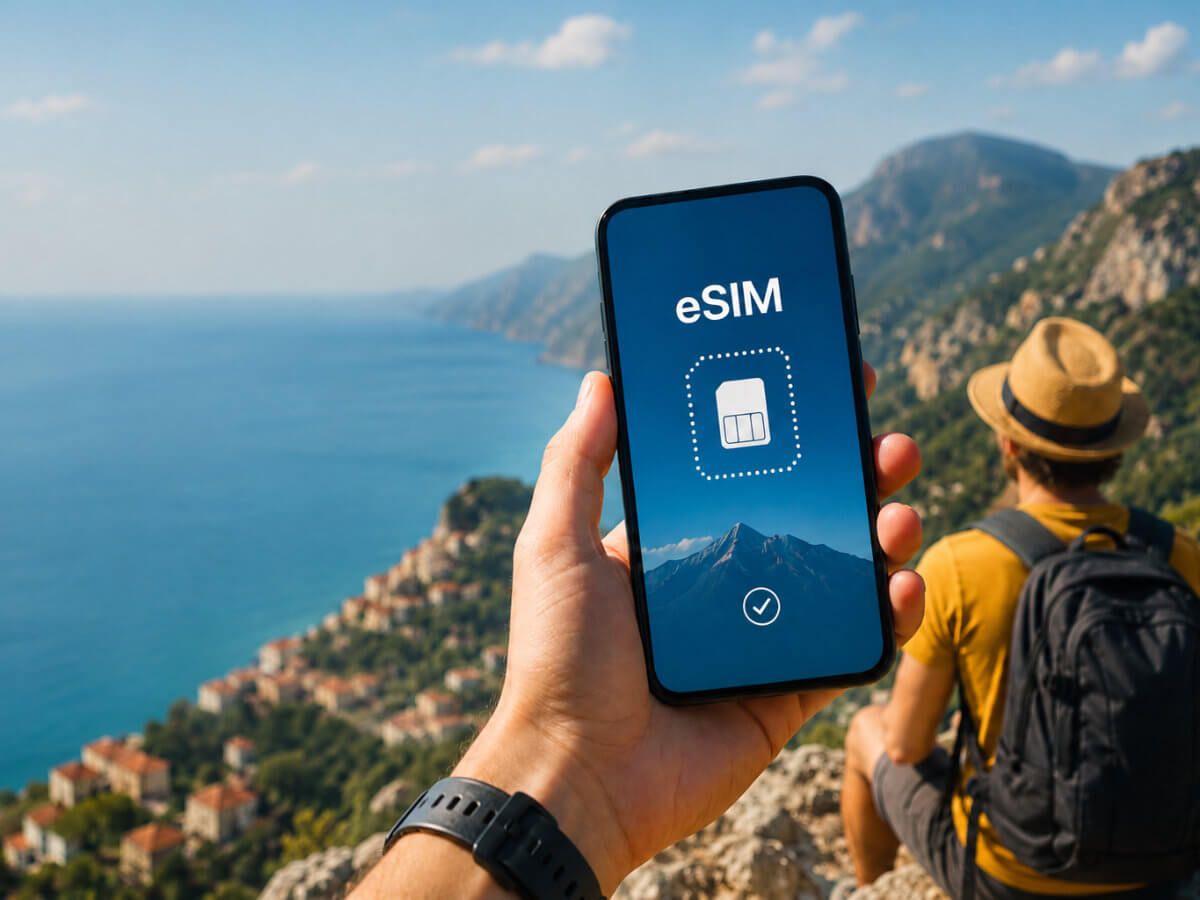
Most travelers don’t realize that their smartphone already supports eSIM, which means no fumbling with tiny physical SIM cards ever again. You simply buy a data plan online, scan a QR code, and activate it instantly—no need to hunt down a local shop at the airport. The real beauty is keeping your home number active while you download a separate travel eSIM for cheap local data in seconds.
Why This Tiny Chip Is Changing Global Trips
The real shift behind this tiny eSIM chip changing global trips is pure freedom. You no longer hunt for a local SIM card at a foreign airport kiosk or risk spotty hotel Wi-Fi for maps. Instead, you scan a QR code before takeoff, and the moment you land, you’re already connected to a local network at better rates than roaming plans.
The key insight? It turns your phone into a universal travel tool, letting you switch data plans for different countries instantly within settings, no physical swap needed.
This seamless, always-on connectivity means you can summon a ride, translate a menu, or share photos immediately. The chip essentially removes the gap between arriving and being fully functional, making every trip smoother from the first step off the plane.
What makes digital SIMs a smarter choice than plastic cards
Digital SIMs offer a smarter choice than plastic cards because they eliminate physical hassle. You activate a plan instantly via an app, avoiding the need to find a store or swap tiny chips. This is especially valuable when arriving in a new country without immediate local access. With a digital SIM, you retain your primary number for calls and texts while using the eSIM for data, a feature a plastic card cannot match. You also avoid the risk of losing a tiny physical card or damaging your phone’s SIM tray. Switching between travel plans becomes a simple profile change, not a card swap.
Comparing cost and convenience across roaming plans
Comparing cost and convenience across roaming plans reveals a stark shift. Traditional international roaming often hides exorbitant daily fees, while local SIMs require hunting for stores and juggling physical cards. E-sim plans, by contrast, offer real-time plan switching between providers without swapping hardware. The cost comparison is immediate: a regional e-sim data pack for a week can undercut a single day of standard roaming. Convenience peaks with pre-purchase and instant activation, letting you compare data speeds against price in-app before connecting. No more surprise bills or wasted hours—just scroll, tap, and save.
The hidden fees you avoid with embedded profiles
With embedded eSIM profiles, you sidestep the hidden carrier surcharges that inflate traditional roaming bills. There’s no activation fee, no daily “service charge” for connecting to a local network, and no surprise taxes tacked onto your bill later. You also avoid the exorbitant per-minute or per-text fees that legacy SIMs often apply without warning. The price you see on the digital plan is the final price—no fine-print costs.
- Zero roaming activation or connection fees
- No surprise daily “service” or network surcharges
- No inflated per-kb data overage costs
- No hidden local taxes added post-purchase
Picking the Right Carrier for Your Destination
Picking the right carrier for your destination with an eSIM starts with verifying local network partners, not just flashy data packages. A major European carrier may provide excellent 5G in Paris, but its partner in rural Crete could be painfully slow, so always check the coverage map for the specific cities and regions you will visit. You should prioritize a provider with multiple carrier partnerships in one country, as this ensures automatic switching to the strongest signal if one network gets congested. Sometimes the most expensive «global» plan relies on a weak secondary carrier that your phone avoids, leaving you disconnected in the exact spot you need navigation. For remote areas, deliberately select an eSIM using that country’s dominant local operator rather than a budget roaming partner. Ultimately, match the eSIM carrier’s strongest infrastructure to your specific itinerary, not the provider’s overall reputation.
Top regional providers offering instant activation
For travelers prioritizing immediacy, top regional providers like Airalo, Holafly, and Yesim excel by offering instant activation eSIM connectivity upon purchase. Airalo’s Asia Link plan, for example, activates within seconds via a QR code, providing immediate local networks in Japan or Thailand. Holafly’s Europe-specific eSIMs activate on first data usage, ensuring seamless roaming without manual setup. Yesim’s app-based activation lets you start a data-only plan for the UAE or Brazil in under a minute, bypassing physical SIM swaps. These providers prioritize speed, letting you connect the moment you land without carrier delays or store visits.
How bundle sizes vary by country and duration
Data bundle sizing for travel eSIMs is not uniform; it depends directly on your destination and trip length. For short weekend trips to developed nations like Japan or the US, carriers often offer small 1GB to 3GB packs valid for 3–7 days, as travelers typically rely on hotel Wi-Fi. Conversely, a two-week trip to a remote region like rural Thailand or Peru might require a 10GB–20GB bundle since public connectivity is scarce. Duration-specific tiering is critical: a 30-day plan in a data-expensive country like Switzerland may cost more per GB than a similar 7-day plan in Spain. Always cross-reference your stay length against the destination’s typical data consumption patterns to avoid overpaying for unused capacity or needing a costly top-up.
| Destination & Duration | Typical Bundle Size (GB) | Plan Validity |
|---|---|---|
| Japan (3–5 days) | 1–3 GB | 3–7 days |
| Thailand (14 days) | 10–20 GB | 15–30 days |
| Switzerland (7 days) | 3–5 GB | 7 days |
| Peru (21 days) | 15–25 GB | 30 days |
Evaluating unlimited data vs capped high-speed tiers
When evaluating unlimited data vs capped high-speed tiers for your eSIM, prioritize your actual usage. Capped high-speed tiers offer reliable performance for mapping, messaging, and streaming, avoiding throttling that plagues so-called «unlimited» plans. Most «unlimited» eSIMs impose a daily speed cap after a small data threshold, rendering video browsing painful. If you need constant, fast connections for work or navigation, a high-speed cap is superior. For heavy video consumption or long tethered sessions, beware: many unlimited plans are unusable beyond casual checks.
| Feature | Unlimited Data | Capped High-Speed |
|---|---|---|
| Typical speed after threshold | Downgraded to 128–256 kbps | Full 4G/5G speeds |
| Best for | Light social media & email | Video calls, streaming, tethering |
| Risk | False economy; unusable throttled speeds | Running out of fast data |
Step-by-Step Setup Before You Board
For a seamless travel experience, step-by-step setup before you board begins by purchasing and installing your eSIM for travel while still connected to Wi-Fi. First, ensure your device is unlocked and compatible. Then, download the eSIM provider’s app or scan the QR code delivered via email. Follow the on-screen prompts to add the cellular plan. Do not activate the plan until you arrive at your destination, as this can waste a day of coverage. Finally, verify the new line appears in your phone’s settings, and set data roaming to “on” for that specific line before takeoff. This pre-flight preparation guarantees immediate connectivity upon landing.
Checking device compatibility across major brands
Before purchasing any travel eSIM, first verify your device supports eSIM technology by checking the model number in your phone’s settings. For iPhones, models from the XS onward are eSIM-compatible, but region-specific variants may lack this feature. Recent Samsung Galaxy S and Z series generally support eSIM, though carrier-locked units often restrict it. Google Pixel devices from the Pixel 3 onward typically work, but again, carrier or regional locks can block activation. For other brands like Huawei or Xiaomi, check official specifications, as compatibility varies sharply by market. Verifying eSIM support by brand prevents buying a plan that cannot be installed.
Device compatibility across major brands hinges on model number, carrier lock status, and regional hardware variations; always confirm before purchase.
Installing a profile via QR code versus app download
When setting up your eSIM before you board, you’ll typically choose between a QR code or an app download. Scanning a QR code with your phone’s camera is the fastest method—just point, tap, and your travel eSIM profile installs China eSIM instantly. No internet required, just a solid camera. An app download, however, guides you through the process step-by-step, which is handy if you’re less tech-savvy, but it does need a Wi-Fi connection first. QR codes dodge that initial data hurdle, while apps offer more visual troubleshooting. Both work fine, so pick based on whether you have Wi-Fi handy or prefer the click-and-go approach.
QR codes are instant and connection-free; app downloads offer guided steps but need Wi-Fi—choose your vibe before you fly.
Configuring APN settings to avoid dropped connections
Misconfigured APN settings are a primary cause of dropped connections, as your device fails to negotiate the correct data pathway. Before boarding, manually input the exact APN provided by your eSIM carrier, typically found in your confirmation email. Ensure the «APN type» field includes default,supl, and verify that «Bearer» is set to LTE or unspecified. A single typo in the APN protocol can force your device to attempt an unavailable network, severing the link. Confirming these details ensures stable eSIM connectivity by aligning your device’s request with the carrier’s gateway, preventing mid-journey dropouts.
Maximizing Connectivity on the Move
Your phone becomes a lifeline the moment you land, but hunting for local SIMs wastes precious time. With an eSIM, you instantly activate a data plan before your flight even touches down, ensuring seamless connectivity on the move from baggage claim to your first taxi. While navigating cobblestone alleys or remote hiking trails, you simply toggle between carriers in your settings, avoiding dropouts when one network fades. Stuck on a delayed train? Your eSIM lets you quickly top up data without leaving the app, keeping your maps, translation tools, and instant messaging alive. No fiddling with tiny trays at the airport—just always-on, maximizing connectivity on the move as you flow through foreign cities, spontaneously relying on real-time directions and local recommendations the moment you need them.
Managing multiple profiles for multi-country itineraries
For multi-country itineraries, managing multiple eSIM profiles is essential to maintain seamless connectivity without constant SIM swaps. Each regional profile (e.g., Europe, Asia) can be stored in your device’s eSIM manager, with data plans purchased per country cluster. Activate only the relevant profile for your current location to avoid unintended roaming charges on other lines. Label profiles clearly by region and priority to switch logically—for instance, disabling a Japan profile when departing for South Korea. This layered approach prevents service gaps, as fallback profiles remain available for sudden border crossings.
Tips for tethering and hotspot usage abroad

Before tethering abroad, verify your eSIM plan’s hotspot policy, as some data-only eSIMs restrict tethering. For stable connectivity, connect devices one at a time and close background apps to conserve your data allowance. Tether with a VPN to bypass potential usage throttling by local carriers. Q: Can I share my eSIM’s data with multiple devices? A: Usually yes, but speed divides among connected users; for heavy streaming, use a dedicated portable hotspot instead.
Switching between networks without service gaps
Switching between networks without service gaps relies on automatic network selection, which eSIMs facilitate by maintaining multiple profiles simultaneously. Your device can scan for stronger signals or fallback to a secondary carrier without manual card swapping. This eliminates the dead zone during transitions, as the handover happens in the background. Immediate reconnection occurs if the primary network loses coverage, preserving active sessions like live navigation or calls.
- Enable data roaming and automatic carrier selection to trigger seamless fallback.
- Keep backup eSIM profiles pre-installed for instant activation during weak signals.
- Use dual-SIM mode to route voice and data over different, concurrently active networks.
- Test network handover before critical travel, ensuring your device prioritises stable connections.
Common Pitfalls and How to Sidestep Them
A common pitfall when using an eSIM for travel is failing to activate the plan before departure, leaving you stranded without connectivity upon arrival. Sidestep this by installing and activating the eSIM while still on Wi-Fi at home. Another frequent misstep is accidentally keeping your primary physical SIM active, which can trigger expensive roaming charges or data conflicts. Always disable your home SIM’s data roaming and set the eSIM as your primary data line in settings. Finally, travelers often overlook coverage restrictions—some eSIMs lack service in rural zones. Pre-check the provider’s map and download offline maps as a backup to ensure seamless navigation.
Bogus providers selling expired or throttled plans
Bogus providers selling expired or throttled plans often lure travelers with impossibly low prices for eSIM data scams. They sell packages with dead activation codes or severely capped speeds after minimal use. To sidestep this, always verify the provider’s validity via independent app store reviews and check the plan’s expiry date in the purchase confirmation. Reading the fine print for a “fair usage” cap is crucial, as throttled plans may drop to 128 kbps after 100 MB. Follow this sequence:
- Cross-reference the provider’s active status on a third-party eSIM comparison tool.
- Test the eSIM’s connectivity immediately upon installation, before traveling.
- Monitor data speed within the first hour of use to confirm no hidden throttle.
Why your home number still works alongside digital data
Your home number remains active because eSIMs only replace the physical SIM slot handling cellular data, not your original line’s identity. During travel, keeping your home number alive prevents two-factor authentication lockouts and lets family reach you without burner numbers. Install the digital profile first, then toggle dual SIM settings so your home line defaults to calls and SMS while the eSIM carries data. For seamless access:
- Enable «Wi-Fi Calling» on your home line before departure – it routes calls over data
- Set your home number as «Secondary» for incoming texts only
- Disable «Data Roaming» on that line to avoid surprise charges
This configuration grounds you in familiar contact while roaming freely.
Battery drain myths and real-world power management
A common myth is that an eSIM itself drains your battery faster than a physical SIM. In reality, the primary battery hog is poor signal strength causing the phone to boost radio power to maintain a connection, not the eSIM profile. For real-world power management, disable the eSIM line when you don’t need data, and manually toggle off cellular data for apps running in the background. Network scanning—especially in low-coverage zones—is the true culprit.
- Disable automatic network selection; manually pick a strong local carrier.
- Turn off «Data Roaming» when connected to Wi-Fi.
- Check your phone’s battery stats: cellular standby, not the eSIM, shows drain.
Pairing Local Essentials with Digital Flexibility
Pairing local essentials with digital flexibility means activating an eSIM for travel before departure, giving you instant access to maps and ride-hailing apps upon landing, without hunting for a physical SIM kiosk. You keep your physical SIM card intact for banking texts or home calls, while the eSIM delivers a separate, local data plan that adapts as you cross borders. This dual-SIM setup lets you preserve your home number for vital OTPs and two-factor authentication, ensuring secure access to banking apps and email. Meanwhile, your eSIM provides the high-speed connection needed to navigate unfamiliar streets, book last-minute accommodation, or translate menus in real time. The result is a travel experience where critical local tools—like local currency exchange apps or public transit tickets—work seamlessly alongside your core digital identity, eliminating the friction of swapping SIMs or relying on spotty Wi-Fi.
Backup solutions for emergency voice calls
Even with a reliable eSIM data plan, having emergency voice call backups is a smart travel safety net. A local physical SIM from a budget carrier can sit in a dual-SIM slot, offering basic voice minutes without using your eSIM data. Alternatively, configure a VoIP app like Skype or Google Voice to route calls over Wi-Fi, ensuring you can dial out even if your eSIM signal drops. For true redundancy, keep a cheap prepaid SIM card—one with no data, just pay-as-you-go credits—in your wallet as a literal last-resort backup for essential voice calls.
Blending public Wi-Fi with cellular data for savings
Blending public Wi-Fi with your eSIM’s cellular data is the smartest way to stretch your travel budget. You can reserve your eSIM’s high-speed allowance for essential moments like navigation or mobile payments, while handling casual browsing and messaging over free hotel or café Wi-Fi. To execute this, first prioritize eSIM data for critical tasks, then toggle off mobile data when connected to a trusted Wi-Fi network. Follow this sequence for seamless savings:
- Enable automatic Wi-Fi hotspot login on your device.
- Turn off cellular data when a verified Wi-Fi signal appears.
- Manually reconnect mobile data only for location or banking apps.
Using offline maps and translation tools wisely
Pair an eSIM’s data with offline maps and translation tools to slash roaming costs. Before departure, download city maps in Google Maps or Maps.me, then pre-load translation packs in Google Translate for offline use. This ensures you navigate and communicate even in weak signal zones. Pairing local essentials with digital flexibility means your eSIM handles only real-time updates, while preloaded data handles the rest.
- Download entire city regions for offline GPS navigation.
- Save common phrases as starred translations for quick access.
- Use a translation tool’s camera mode to decode menus without data.
- Cache local transit schedules to avoid streaming map updates.
Future Trends in Roaming Technology
Future roaming technology will leverage eSIM for travel to enable seamless multi-network switching without manual intervention. Devices will dynamically connect to the strongest local signal in real-time, eliminating the need for pre-selected roaming partners. This evolution will embed carrier profiles directly into travel eSIMs that automatically activate upon arrival at a destination, ensuring instant connectivity. Advanced remote provisioning will allow travelers to download and manage multiple data plans from their device settings, supporting concurrent profiles for separate countries. eSIMs will also integrate with global Wi-Fi calling standards, intelligently routing calls over the lowest-cost network, whether local cellular or a secure internet connection. This shift prioritizes spontaneous, uninterrupted data access for users, reducing reliance on physical SIM swaps or manual plan activation.
How 5G and satellite integration expand coverage
For travel eSIMs, 5G and satellite integration means you’ll stay connected far beyond city limits. 5G handles fast data in urban hubs, while satellite steps in when terrestrial towers vanish—over oceans, deserts, or mountains. This hybrid setup lets your eSIM automatically switch between networks without interruption, so you’re not hunting for Wi-Fi in remote areas. Seamless global roaming becomes a reality, covering gaps in coverage that previously left travelers offline. Instead of carrying a satellite phone, your standard eSIM profile now taps into low-earth orbit satellites for basic messaging and emergency connectivity when 5G is unavailable.
- Your eSIM auto-selects 5G in cities and satellite in rural dead zones.
- Satellite connectivity supports location sharing and text alerts without a separate plan.
- No manual network switching—the integration keeps you linked during flights or sea voyages.

Predictions for seamless global data in the next decade
In the next decade, seamless global data will become so automatic that you’ll land in a new country and your eSIM will instantly pick the strongest local network without you touching a setting. Expect your phone to pre-cache local maps and ride-hailing apps before you even leave the plane. Rural connectivity gaps will narrow as eSIMs aggregate multiple regional carriers at once, so a train ride through the Alps won’t drop your video call.
- Dynamic pricing will vanish—you’ll pay a flat monthly rate for truly worldwide coverage.
- Your eSIM will seamlessly switch between 5G and satellite backhaul in dead zones.
- Multi-profile eSIMs will merge your home and travel data into one always-on connection.
Why travel insurers are beginning to bundle digital access

Travel insurers are beginning to bundle digital access because constant connectivity is now a prerequisite for policy functionality. Without reliable mobile data, a traveler cannot quickly submit a claim, access a digital insurance card, or use a telemedicine service during a trip. By bundling an eSIM data plan directly into the policy, insurers ensure their services actually work the moment they are needed. This shift positions immediate network availability as a core feature of the claim process, not just an add-on. For the user, this eliminates the risk of finding themselves offline and unable to trigger essential coverage responses, making connected policy activation a tangible, practical benefit embedded in the insurance product itself.
How Staying Connected Abroad Has Changed
What a digital SIM actually is and why it matters for trip connectivity
How an embedded profile replaces a physical plastic card
Key Advantages of Using a Digital Profile Over Traditional Roaming
Skipping the airport SIM hunt and long activation queues
Keeping your home number active while using a local data line
What to Check Before Buying a Plan for Your Destination
Device compatibility: which phones and tablets support the technology
Data caps, speed limits, and fair usage policies explained
Step-by-Step Guide to Installing and Activating a Digital SIM
Scanning a QR code or entering details manually on your phone
Switching between your home carrier and travel plan on the same device
Practical Tips for Managing Data Costs and Coverage
How to avoid surprise charges when crossing borders or time zones
Choosing between regional bundles and single-country plans for multi-stop trips
Common Questions Travelers Have About This Connection Method
Can I use it for tethering or hotspotting to other devices
What happens to my existing apps and messages when the new line activates
wordpress theme by initheme.com